Israel TIN Number Guide — Mispar Zehut, Osek Murshe & H.P. Company Number
Mispar Zehut (Teudat Zehut — Personal Identity Number)
The Mispar Zehut (מספר זהות) is the personal identity number shown on the Teudat Zehut identity card. To check the format of a number, use the Israel TIN validator.
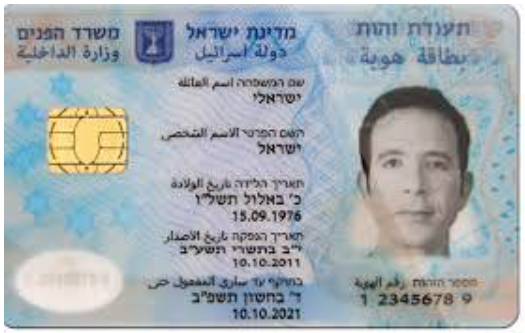 |
| Mispar Zehut (Teudat Zehut) |
H.P. Company Number (TIN for Legal Entities)
Israeli companies registered with the Israeli Corporations Authority (Rashut HaTaagidim) receive a 9-digit company registration number — commonly referred to as the H.P. number (from the Hebrew Hevra Pratit, private company). This number serves as the corporate TIN.
Format: 9 numeric digits with no internal separators or embedded meaning. For VAT-registered companies, the Israel Tax Authority uses the same 9-digit number as the VAT registration identifier.
The H.P. number appears on the Certificate of Incorporation (Teudat Hitaagdut). A company's registration details — including its H.P. number and registered status — can be searched publicly through the Israeli Corporations Authority register.
VAT Status: Osek Murshe and Osek Patur
Israel's VAT system creates two categories of self-employed dealers and small businesses:
| Category | Hebrew | Description |
|---|---|---|
| Osek Murshe | עוסק מורשה | Authorized dealer — must charge 18% VAT, file VAT returns, and may reclaim input VAT |
| Osek Patur | עוסק פטור | Exempt dealer — within the annual turnover ceiling, does not charge VAT, cannot reclaim input VAT |
Osek Patur status is capped by an annual turnover ceiling, which the Israel Tax Authority gives as NIS 120,000 for 2024. It is a ceiling for exempt status, not a registration threshold — exempt dealers open a VAT file too (see VAT registration thresholds). Companies (reg 13(7)) and the other groups in regulation 13 of the VAT (Registration) Regulations, such as lawyers and accountants, must register as authorised dealers. [1] [2]
A foreign resident or foreign company that wants to operate in Israel opens a VAT file on Form 22 together with Form 821 and appoints a representative in Israel. See the FAQ below for foreign registration requirements.
Israeli E-Invoicing: Mispar Haktzaat (Allocation Number)
Israel has implemented a Continuous Transaction Controls (CTC) clearance model known as the Israeli Invoices Model. For a qualifying B2B tax invoice, the supplier reports the invoice data to the Israel Tax Authority — through accounting software connected to the Tax Authority, or the Tax Authority's web application — and obtains a unique 9-digit allocation number (mispar haktzaat — מספר הקצאה), which is shown on the invoice. A number is needed when the amount before VAT exceeds the threshold, the invoice includes VAT, the customer is an authorised dealer (Osek Murshe) and the customer asks for one.
Current threshold: tax invoices exceeding NIS 5,000 before VAT, since 1 June 2026 (Israel Tax Authority VAT Implementation Instruction 01/2025 of 7 December 2025). An invoice of exactly NIS 5,000 is not caught. [3]
| From | Threshold (amount before VAT) |
|---|---|
| 1 June 2026 (current) | exceeds NIS 5,000 |
| 1 January 2026 | exceeds NIS 10,000 |
| 1 January 2025 | exceeds NIS 20,000 |
| 5 May 2024 (start) | exceeds NIS 25,000 [4] |
Instruction 01/2025 replaced the earlier schedule in Instruction 01/2024, which had planned NIS 15,000 for 2026, NIS 10,000 for 2027 and NIS 5,000 from 2028.
Without a valid allocation number on an invoice above the threshold, the buyer cannot deduct the input VAT on that invoice. Where the Tax Authority refuses a number, Instruction 01/2025 also allows a buyer reverse charge: the supplier receives a special allocation number and issues a 0% VAT invoice, and the buyer issues a self-invoice with the same number and reports and pays the VAT.
Suppliers can request allocation numbers and buyers can verify invoice validity through the Israel Tax Authority's online service.
Frequently Asked Questions
What happens if an Osek Patur exceeds the annual turnover ceiling?
An Osek Patur (exempt dealer) file can be opened only where expected annual turnover does not exceed the exempt-dealer ceiling, which the Israel Tax Authority gives as NIS 120,000 for 2024. A business that expects to exceed the ceiling opens an Osek Murshe (authorised dealer) file instead, on Form 821 at the regional VAT office. Companies (reg 13(7)) and the other groups in regulation 13 of the VAT (Registration) Regulations, such as lawyers and accountants, must register as authorised dealers whatever their turnover. [1] [5] [2]
Does a foreign company selling into Israel need to register for VAT, and is a local representative mandatory?
A foreign resident, or a company registered as a foreign company, that wants to operate in Israel opens a VAT file with the Israel Tax Authority on Form 22 together with Form 821, and must appoint a representative in Israel. Under regulation 6(a) of the VAT (Registration) Regulations, a foreign dealer notifies the representative's name within 30 days of starting activity in Israel; the representative must be an individual whose permanent residence is in Israel, or a company registered in Israel. The Israel Tax Authority's Form 22 page asks for a certificate of incorporation (for a company) or a passport with an entry visa (for an individual), and a notarised power of attorney where documents are signed abroad. [6] [2] [7]
Does Israel require foreign digital service providers to register for VAT on B2C sales to Israeli consumers?
Regulation 6D of the VAT Regulations puts the liability to pay the VAT on the buyer when the seller is a foreign resident, unless the buyer holds an invoice. This applies to any buyer, not only businesses: a buyer that is not a dealer reports the purchase as an occasional transaction. No regime makes a foreign seller register or collect VAT on remote sales to consumers. A foreign resident or foreign company that wants to operate in Israel registers on Form 22 and appoints a representative in Israel. [8] [6]
What is the Israeli e-invoicing allocation number (mispar haktzaat), and what happens to a buyer's VAT deduction without one?
Israel has implemented a continuous transaction controls (CTC) clearance model called the Israeli Invoices Model. Since 1 June 2026, a tax invoice whose amount before VAT exceeds NIS 5,000 needs an allocation number (mispar haktzaat) from the Israel Tax Authority when the invoice includes VAT, the customer is an authorised dealer and the customer asks for one; the supplier obtains it through connected accounting software or the Tax Authority's web application. The threshold has stepped down from more than NIS 25,000 when the model started on 5 May 2024, to more than NIS 20,000 in January 2025 and more than NIS 10,000 in January 2026. Without the allocation number the buyer cannot deduct the input VAT on that invoice. Where the Tax Authority refuses a number, Instruction 01/2025 also allows a buyer reverse charge, in which the supplier issues a 0% VAT invoice and the buyer self-invoices and pays the VAT. Buyers can check a supplier's allocation number through the Tax Authority's online verification service. [9] [3] [4]