Cambodia makes the state bear VAT on six domestically produced basic foods from 2026 to the end of 2028
This page records one dated change. For the rules in Cambodia as they stand today, see the Cambodia guide →
- Jurisdiction
- Cambodia
- Tax
- VAT
- Change type
- Rate change
- Status
- In force
- Impact
- FYI
- Announced
- 17 November 2025
- Effective
- 1 January 2026
- Instrument
- KH-PRAKAS-948-MEF-Prk-GDT
- Authority
- Ministry of Economy and Finance, Cambodia
- Verified
- Fetched from official source · medium confidence
Cambodian taxpayers under the self-assessment regime supplying domestically produced meat, eggs, fish and seafood, sugar, salt, fish sauce or soy sauce; restaurant meals are not covered.
From 1 January 2026 until the end of 2028, the state bears the VAT on domestic supplies of six kinds of domestically produced basic food (meat, eggs, fish and seafood, sugar, salt, fish and soy sauce). Suppliers should apply the state-burden treatment to these goods. Restaurant meals are not covered.
Prakas No. 948 MEF.Prk.GDT of 17 November 2025, issued by the Ministry of Economy and Finance, makes the state bear the VAT on domestic supplies by taxpayers under the self-assessment regime of six kinds of domestically produced basic food, from 1 January 2026 until the end of 2028. The six kinds are: (1) livestock meat, fresh or fermented, salted or smoked; (2) eggs of all kinds, fresh or processed; (3) freshwater and saltwater fish of all kinds, including lobster, prawns, small shrimp, crab and shellfish, fresh or processed; (4) sugar of all kinds other than candy; (5) salt of all kinds; and (6) fish sauce and soy sauce. Meals supplied by restaurants are excluded. It repeals Prakas No. 171 of 20 March 2024 on the same subject.
What changed in detail
Prakas No. 948 MEF.Prk.GDT, signed by the Ministry of Economy and Finance on 17 November 2025 and published by the General Department of Taxation, makes the state bear the VAT on domestic supplies of domestically produced basic food. Article 1 states that purpose: to ease the daily cost of living. Article 2 sets its scope: supplies of domestically produced basic food by taxpayers under the self-assessment regime.
Article 3 lists six kinds of basic food:
- livestock meat, fresh or fermented, salted or smoked;
- eggs of all kinds, fresh or processed;
- freshwater and saltwater fish of all kinds, including lobster, prawns, small shrimp, crab and shellfish, fresh or processed;
- sugar of all kinds other than candy;
- salt of all kinds;
- fish sauce and soy sauce.
Under Article 4, the VAT on domestic supplies of these foods is borne by the state until the end of 2028, and meals supplied by restaurants are not covered. The Prakas applies from 1 January 2026 and repeals Prakas No. 171 of 20 March 2024 on the same subject.
The Prakas is published as a Khmer-language scan. The General Department of Taxation’s Prakas listing gives the same number and date.
What it means
The measure is in force in November 2026 and runs to the end of 2028. The food must be produced in Cambodia: imported meat, fish or sugar is not covered, so a supplier selling both needs to track origin by product line.
State-borne VAT is not the same as an exemption or a zero rate. The suppliers covered remain in the VAT system, so how they invoice and report these supplies follows the General Department of Taxation’s practice for state-borne VAT. Restaurants cannot apply it to meals, even where the ingredients would qualify.
Proof
ប្រកាសនេះ មានគោលបំណងដាក់ជាបន្ទុករបស់រដ្ឋនូវអាករលើតម្លៃបន្ថែមលើមុខទំនិញផលិតក្នុងស្រុក ដែលជាអាហារជាមូលដ្ឋាន ដើម្បីជួយសម្រួលជីវភាពរស់នៅប្រចាំថ្ងៃរបស់ប្រជាពលរដ្ឋ។This Prakas aims to place as a state burden the value added tax on domestically produced goods that are basic food, to help ease the daily livelihood of the people.
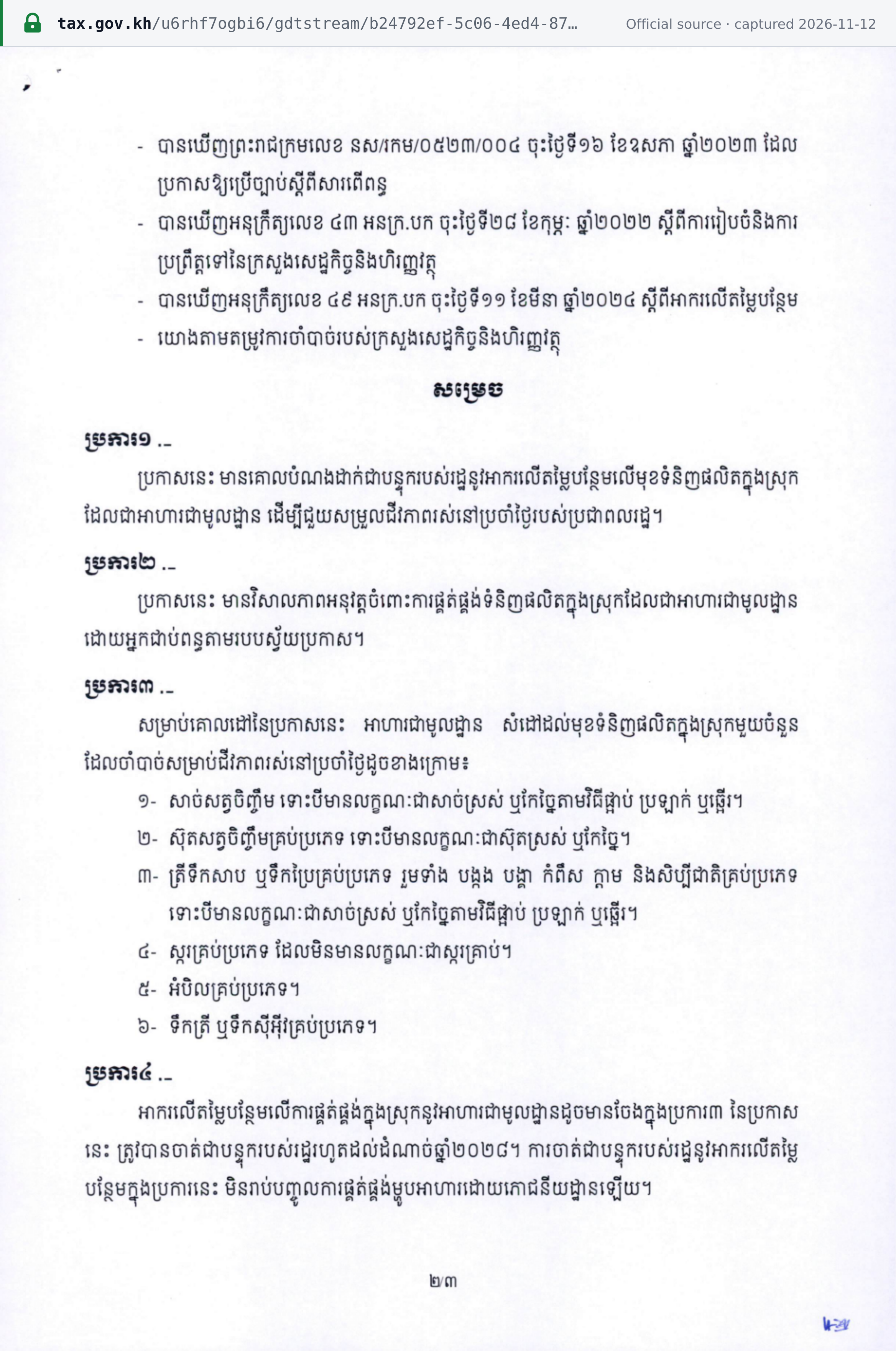 Source snapshot of the official page. Open full size ↗
Archived from the official distribution · Prakas No. 948 MEF.Prk.GDT of 17 November 2025, General Department of Taxation, Cambodia · www.tax.gov.kh