Sri Lanka’s Budget 2027 proposes giving electronic VAT invoices the same legal validity as paper invoices (not yet law)
This change is proposed and is not law. The rules below describe what would change if it is adopted.
This page records one dated change. For the rules in Sri Lanka as they stand today, see the Sri Lanka guide →
- Jurisdiction
- Sri Lanka
- Tax
- VAT
- Change type
- Invoice rules
- Status
- Proposed
- Impact
- Watch
- Announced
- 12 November 2026
- Effective
- 1 April 2027
- Authority
- Ministry of Finance, Planning and Economic Development, Sri Lanka
- Systems
- Invoicing, ERP
- Verified
- Fetched from official source · high confidence
VAT-registered persons in Sri Lanka that issue or receive tax invoices.
VAT-registered businesses in Sri Lanka: watch for the amending Act and the CGIR Gazette order that will set e-invoice format and particulars before switching from paper invoices.
InvoicingERP
Sri Lanka's Budget 2027 Technical Note (12 November 2026) proposes that digital or electronic VAT invoices be recognised as legally valid in the same way as paper-based invoices, with the format, particulars and technical and procedural requirements to be specified by the Commissioner General of Inland Revenue by order published in the Gazette. Unless stated otherwise, the Technical Note's amendments are to take effect from 1 April 2027; they require amending legislation.
What changed in detail
This is a budget proposal, not law. Sri Lanka’s Budget Speech 2027 was delivered on 12 November 2026, and the accompanying Technical Note on tax proposals lists the amendments the government intends to make to the Value Added Tax Act, No. 14 of 2002.
Item 2.6 of the Technical Note, “Validity of Electronic Tax Invoices”, proposes that digital or electronic invoices be recognised as legally valid in the same way as paper-based invoices. The format, particulars and technical and procedural requirements of an electronic invoice would be specified by the Commissioner General of Inland Revenue (CGIR) by order published in the Gazette.
Item 9 of the Technical Note provides that, unless specifically mentioned otherwise in the Technical Note or the relevant tax legislation, the proposed amendments will be effective from 1 April 2027. Item 2.6 does not state a separate date. The change requires an amending Act to be passed by Parliament.
What it means
This is the legal foundation the national e-invoicing system announced in May 2026 has been missing: today the VAT Act is built around paper tax invoices. The proposal itself does not mandate e-invoicing. It makes an electronic invoice valid, and hands the detail to a CGIR Gazette order. Until both the amending Act and that order exist, keep issuing tax invoices in the current revised format and plan system changes against the Gazette order, not the budget text.
Proof
The digital or electronic invoices will be recognized as legally valid similarly as paper-based invoices. The format, particulars, technical and procedural requirements of electronic invoice will be specified by the CGIR, by order published in the Gazette.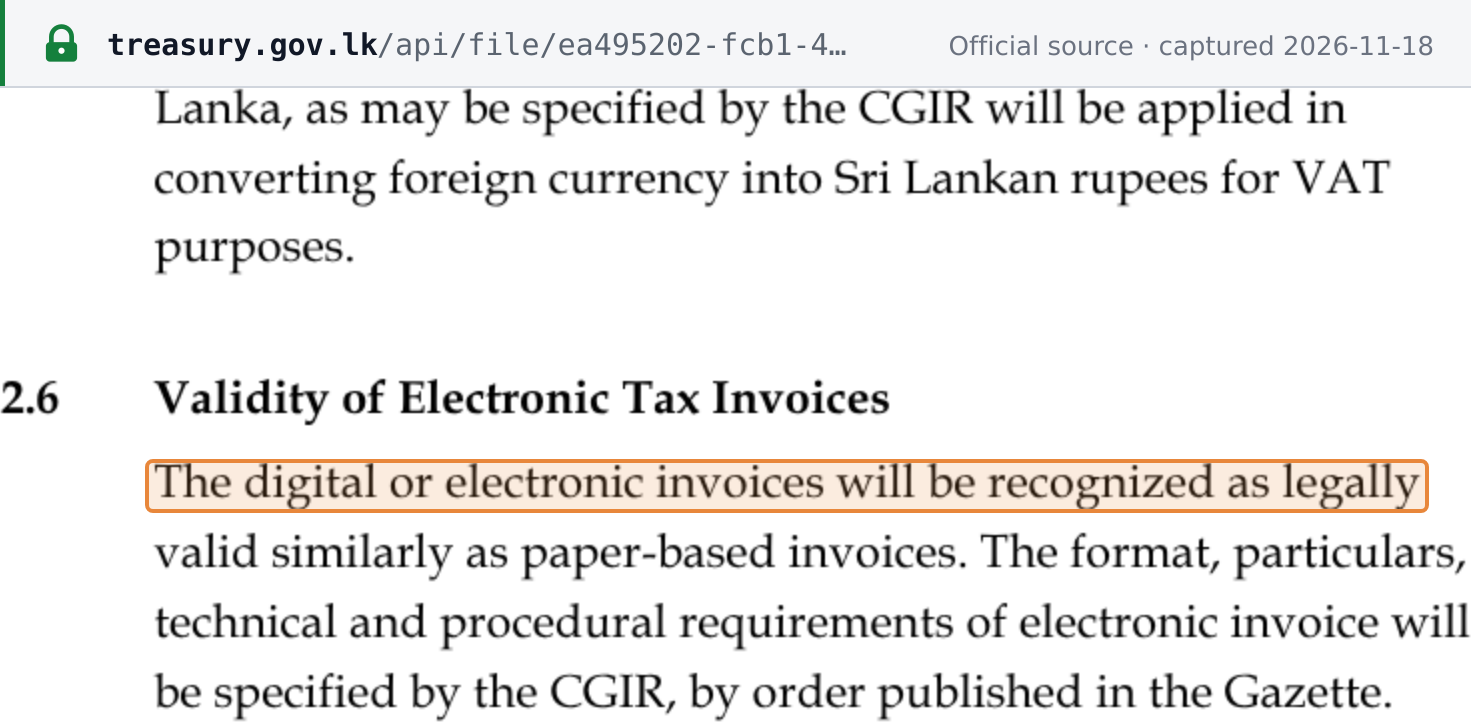 Source snapshot of the official page. Open full size ↗
Unless specifically mentioned otherwise in this Technical Note or the relevant Tax Legislation, amendments proposed herein before will be effective from April 1, 2027.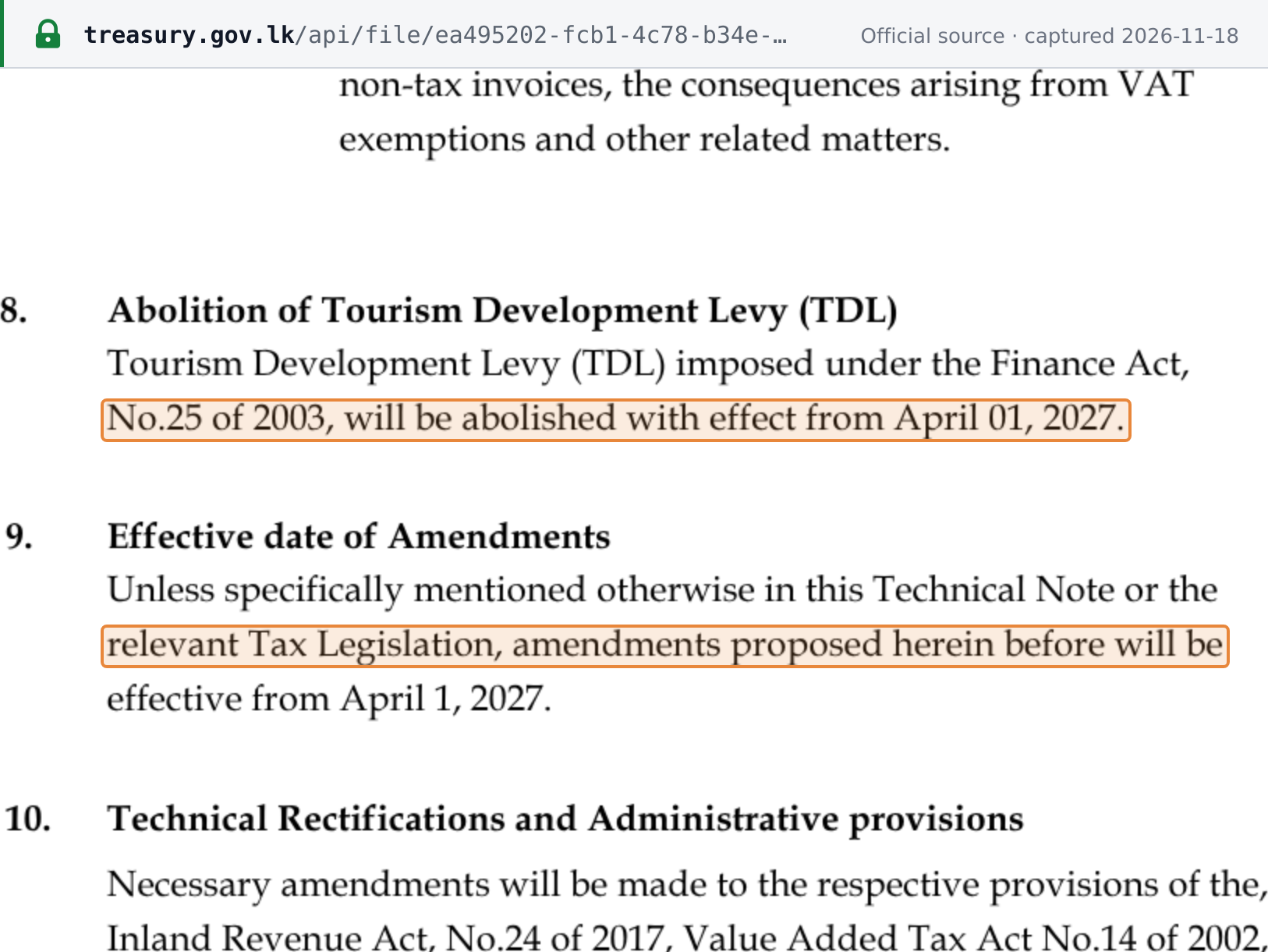 Source snapshot of the official page. Open full size ↗