Belgium tables bill DOC 56 1846 to replace the annual client listing with VAT e-reporting from 1 January 2028 (not yet law)
This change is proposed and is not law. The rules below describe what would change if it is adopted.
This page records one dated change. For the rules in Belgium as they stand today, see the Belgium guide →
- Jurisdiction
- Belgium
- Tax
- VAT
- Change type
- E-invoicing
- Status
- Proposed
- Impact
- Plan ahead
- Announced
- 27 October 2026
- Effective
- 1 January 2028
- Authority
- Belgian Chamber of Representatives
- Systems
- Invoicing, ERP, Reporting
- Verified
- Fetched from official source · high confidence
Belgian VAT taxpayers that issue or receive structured electronic invoices (and assimilated documents), who would report invoice data electronically instead of filing the annual listing of taxable customers.
Belgian VAT-registered businesses already issuing structured e-invoices: plan for continuous e-reporting of invoice data from 1 January 2028 and the end of the annual customer listing, subject to the bill being adopted.
InvoicingERPReporting
The Belgian government submitted bill DOC 56 1846/001 to the Chamber of Representatives (27 October 2026), amending the VAT Code to introduce electronic reporting (e-reporting) of data from structured electronic invoices, replacing the annual listing of taxable customers. Article 3 provides that the law enters into force on 1 January 2028. The Chamber's Finance and Budget Committee adopted the bill on 10 November 2026; the plenary vote is pending.
What changed in detail
This is a bill before the Chamber, not law. On 27 October 2026 the Belgian government tabled bill DOC 56 1846/001 in the Chamber of Representatives, amending the VAT Code (Wetboek van de belasting over de toegevoegde waarde / Code de la TVA) with respect to an electronic reporting obligation and the abolition of the obligation to file the annual listing of taxable customers.
According to the bill and its explanatory memorandum:
- Article 2 would replace the current article 53quinquies of the VAT Code, which requires an annual listing of taxable customers, with an electronic reporting obligation, in particular for issuers and recipients of structured electronic invoices or of documents issued in that form that are treated as assimilated to them;
- for the taxpayers concerned, e-reporting would replace the annual customer listing;
- the listing for transactions carried out in 2027 would still be due, by 31 March 2028;
- under a transitional rule, taxpayers not established in Belgium but VAT-identified there could keep filing the annual listing for transactions up to 30 June 2030.
Article 3 provides that the law enters into force on 1 January 2028.
Chamber stage (as at 18 November 2026). According to the Chamber’s file for DOC 56 1846, the Finance and Budget Committee adopted the bill on 10 November 2026. The plenary vote is still pending, so the bill is not yet law.
This is the parliamentary stage of the preliminary draft law approved by the Council of Ministers in July 2026, and it now carries the 1 January 2028 date in the bill text itself.
What it means
Belgium’s B2B e-invoicing mandate already runs on structured invoices; this bill adds the second half, reporting the data from those invoices to the tax authority, and in exchange drops the annual client listing. Until the Chamber adopts the bill and it is published, nothing changes: the listing for 2026 and 2027 is still due under current rules. Businesses planning ERP and Peppol access-point work for 2028 can now plan against a bill text rather than a press communiqué, but the text can still change until the plenary votes on it.
Proof
Art. 3. Deze wet treedt in werking op 1 januari 2028.Art. 3. This law enters into force on 1 January 2028.
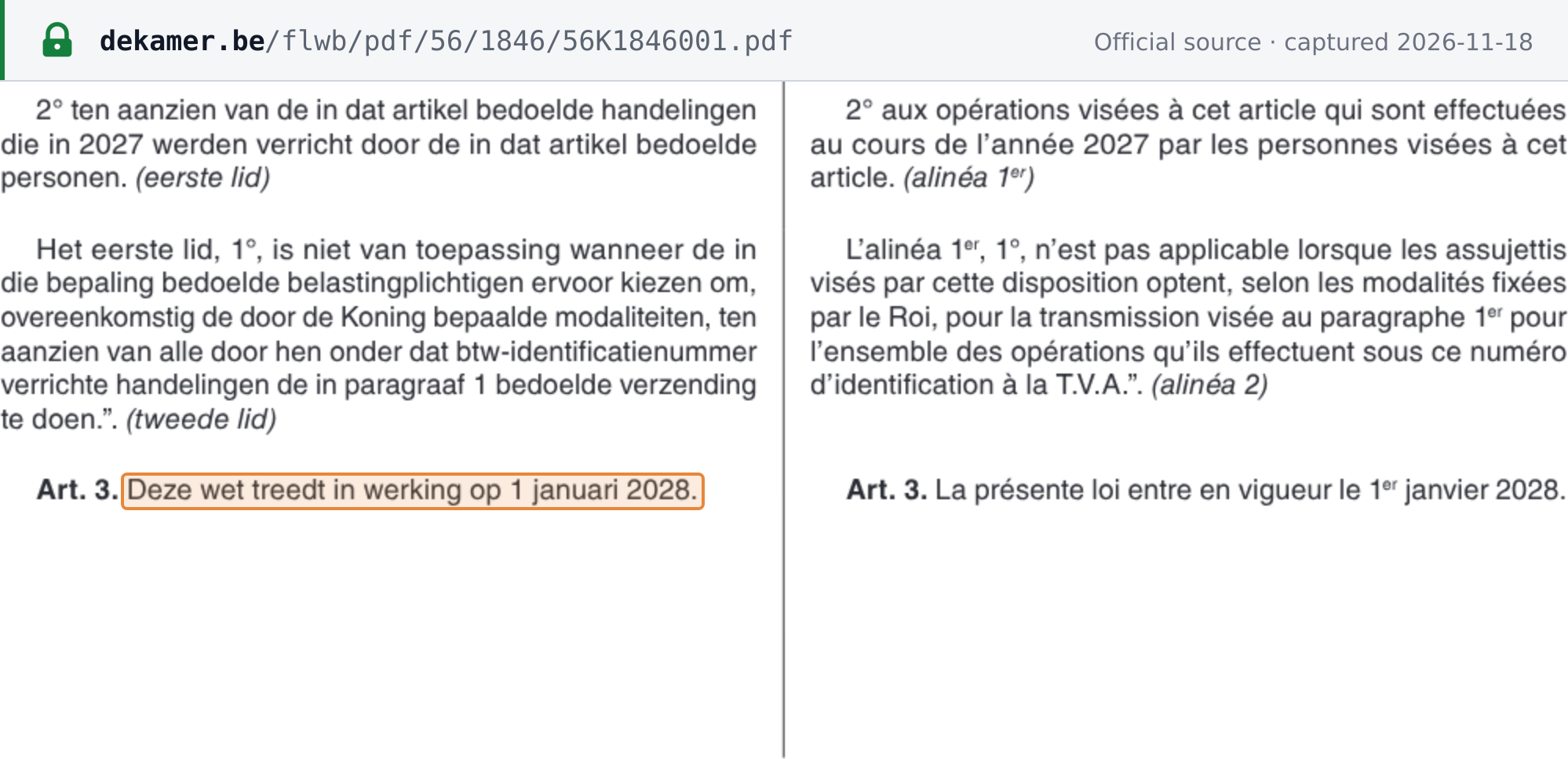 Source snapshot of the official page. Open full size ↗
WETSONTWERPBILL
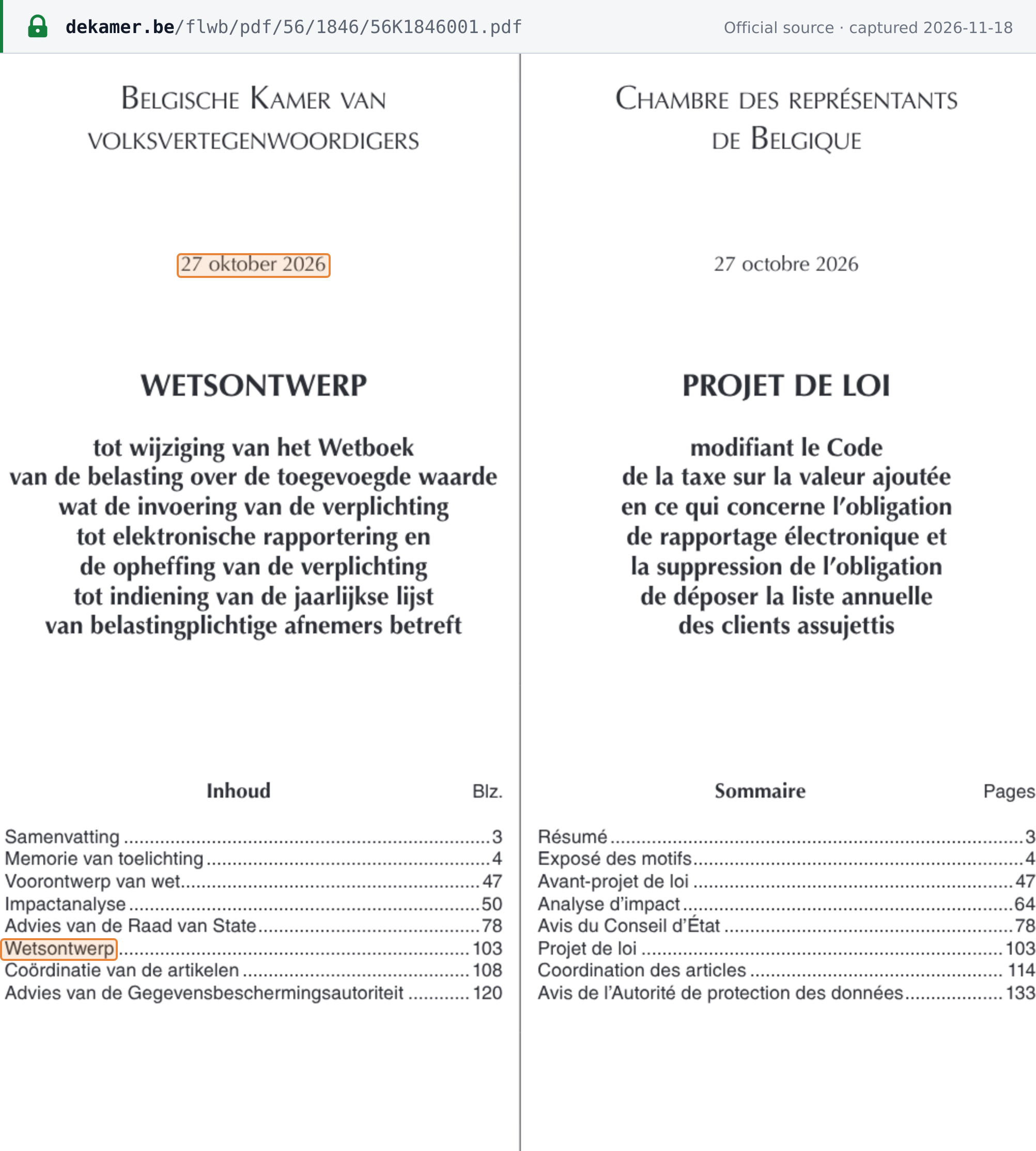 Source snapshot of the official page. Open full size ↗
Sources
What this replaces
- Belgium proposes near-real-time VAT e-reporting from 2028 and drops the annual client listing effective 1 January 2028